
Industrial facilities depend on stable and efficient electrical systems to keep machines running, control energy costs, and avoid unexpected downtime. One of the most overlooked aspects of this efficiency is the power factor, which reflects how effectively electrical power is being converted into useful work. When power factor drops, losses increase and equipment is pushed harder than necessary. This is where power factor correction capacitors play a vital role, helping industries improve system performance, reduce strain on transformers and cables, and maintain healthier voltage levels. Understanding how to choose the right solution is essential for reliable and efficient operations today.
Understanding Power Factor in Industrial Systems
Power factor is the ratio between real power that performs useful work and apparent power that flows through the system. In many industrial plants, motors, transformers, welding machines, and variable loads are inductive in nature. These devices draw reactive power, which does not produce work but still loads the electrical network. A low power factor means higher current for the same output, leading to increased heat, voltage drops, and unnecessary losses. Over time, this can shorten equipment life and reduce the overall reliability of the power system.
Why Correcting Power Factor Matters
Improving power factor is not just about reducing electricity bills, even though lower demand charges are often a welcome result. More importantly, it helps stabilize voltage levels, frees up capacity in existing cables and transformers, and reduces stress on switchgear. A well-corrected system operates more smoothly, with less risk of nuisance tripping and overheating. From an engineering perspective, it also brings the electrical network closer to its designed operating conditions, which is essential for long-term safety and performance.
Types of Capacitors Used for Power Factor Correction
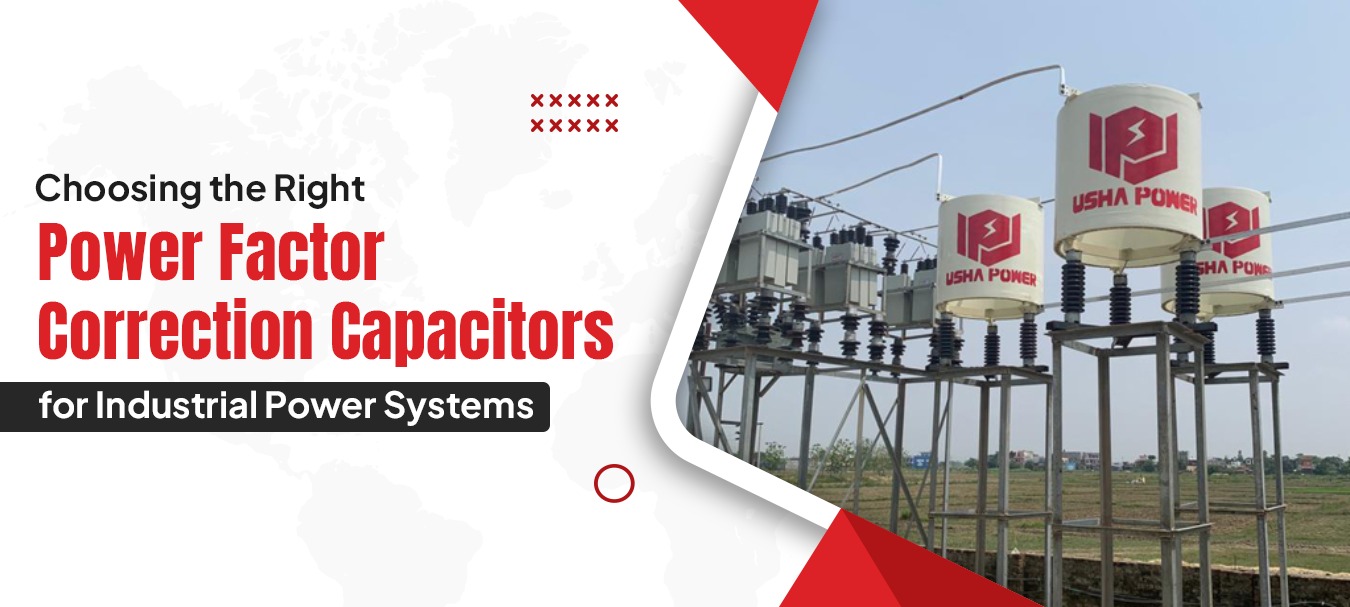
Capacitors used in industrial environments are designed to supply reactive power locally, countering the effect of inductive loads. Among these, power factor correction capacitors are commonly arranged in fixed or automatic banks. Fixed banks are connected directly to specific loads and are suitable where demand remains fairly constant. Automatic banks, on the other hand, use controllers to switch capacitor steps in and out as load conditions change, making them ideal for plants with fluctuating demand. There are also detuned and tuned systems, which include reactors to protect against harmonics and resonance in networks with non-linear loads.
Key Factors to Consider When Choosing Capacitors
Selecting the right solution requires more than just knowing the kvar rating. The operating voltage of the system, ambient temperature, and expected load profile all play a role in determining the right design. It is also important to assess the presence of harmonics, as modern industrial equipment like drives and inverters can distort waveforms and affect capacitor life. When evaluating power factor correction capacitors, engineers should look at insulation class, discharge resistors, loss levels, and compliance with relevant standards to ensure safe and durable operation under real working conditions.
Sizing and Placement in the Network
Correct sizing is critical for achieving the desired improvement without overcompensation. Oversized banks can push the system into a leading power factor, which may cause voltage rise and instability. Undersized systems, on the other hand, fail to deliver meaningful benefits. Load studies and power quality measurements provide valuable data for deciding the total kvar required and how it should be distributed. In many cases, placing power factor correction capacitors close to large inductive loads reduces current in feeders and improves local voltage, while centralized banks help manage overall plant demand.
Installation, Monitoring, and Maintenance
Even the best-designed system needs proper installation and regular attention. Capacitor banks should be installed in well-ventilated areas, protected from dust, moisture, and excessive heat. Continuous monitoring of current, voltage, and temperature helps detect early signs of imbalance or component failure. Periodic inspection ensures that connections remain tight and that protective devices function as intended. With proper care, power factor correction capacitors can deliver consistent performance for many years, supporting both efficiency and reliability in demanding industrial environments.
Common Mistakes to Avoid
One common mistake is ignoring harmonics during system design, which can lead to overheating and premature failure. Another is assuming that a single fixed solution will suit all operating conditions, even when loads vary widely during shifts or seasons. Poor ventilation, incorrect switching sequences, and lack of routine checks also contribute to reduced service life. Avoiding these issues requires a clear understanding of the electrical network and a willingness to review system performance as plant conditions evolve.
Final Thoughts
Choosing the right approach to power factor correction is a technical decision that directly affects the health of an industrial power system. By understanding load behaviour, selecting suitable equipment, and paying attention to installation and maintenance, industries can build networks that are more stable, efficient, and resilient. The goal is not just to meet utility requirements, but to create an electrical environment where machines operate smoothly and energy is used wisely. In the long run, thoughtful planning in this area becomes a quiet but powerful contributor to dependable industrial operations.
If you are the owner of an industrial unit and searching for capacitors that deliver reliable performance, consistent quality, and long-term operational value for your power systems, Usha Power is here to provide expert guidance and high-quality solutions tailored to meet the unique demands of your facility. Our focus remains on offering solutions that support efficient power usage, system stability, and dependable electrical performance across diverse applications. With years of experience in the power sector, we work closely with industries to understand their specific load conditions, operating demands, and technical expectations, helping ensure that the selected capacitors align with real-world requirements. Our approach is built around technical knowledge, careful guidance, and a commitment to supporting industries in creating power systems that are safe, efficient, and future-ready, while maintaining reliability in everyday operations and long-term energy management.