In modern electrical systems, two components often discussed together are harmonic filters and capacitor banks, mainly because both play an important role in improving power quality. Although they appear similar at first glance, these devices serve very different purposes in industrial and commercial networks. Harmonic filters help reduce distortion caused by nonlinear loads, while capacitor banks strengthen reactive power support and stabilize voltage. Many engineers and maintenance teams compare the two to understand where each one fits in a system. This blog explains their functions, working principles, and why both are essential in today’s power-heavy environment.
Understanding Harmonic Filters
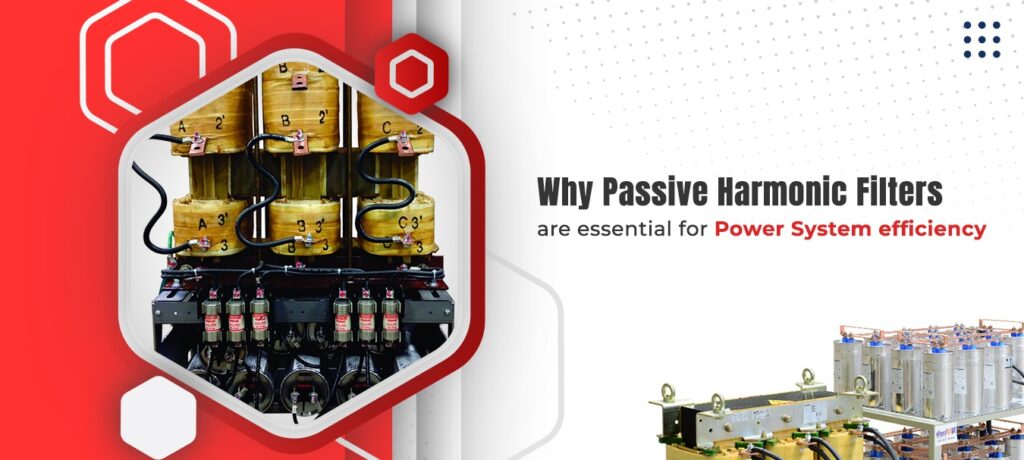
A harmonic filter is designed to deal with one of the most persistent problems in electrical networks: harmonic distortion. Harmonics occur when equipment such as variable frequency drives, UPS systems, welding machines, or any device with non-linear characteristics draw current in an irregular waveform. These distortions spread through the electrical network and create heating in transformers, unnecessary tripping of protective devices, failure of sensitive equipment, and a gradual reduction in system reliability. A harmonic filter works by redirecting unwanted harmonic currents and providing a separate path where these frequencies can be absorbed or neutralized. In simple terms, it cleans the electrical waveform so that equipment receives a smoother and more predictable supply. Engineers rely on harmonic filters particularly in factories where automation and inverter-based loads are continuously increasing.
Understanding Capacitor Banks
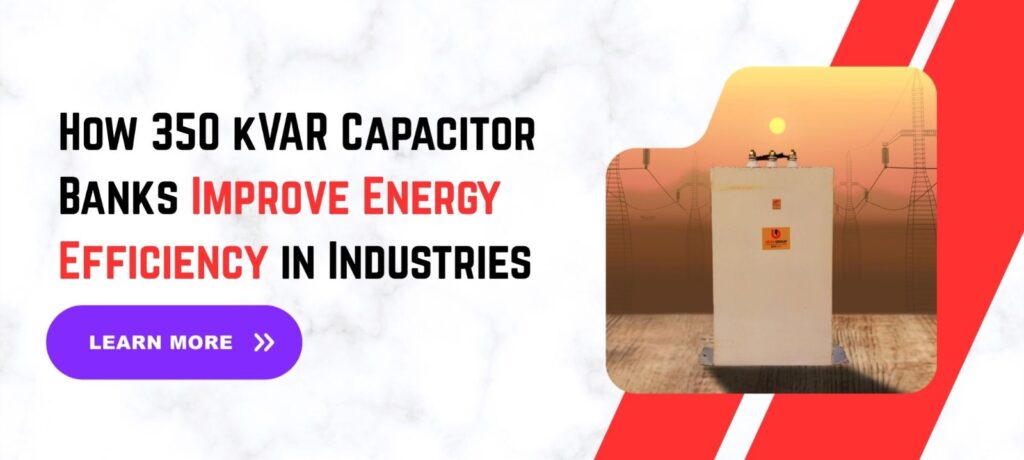
A capacitor bank supports a different challenge: reactive power. Every industrial setup requires a certain amount of reactive energy to run motors, compressors, pumps, and various inductive loads. Without enough reactive power, voltage begins to dip, cables heat up, and the overall system becomes less efficient. A capacitor bank supplies this needed reactive power locally so that the connected equipment does not have to pull excessive reactive energy from the grid. This helps reduce electricity bills, prevents penalty charges, and maintains the voltage profile of the network. Capacitor banks are also used widely in commercial buildings where load patterns keep shifting throughout the day. Their ability to stabilize power factor makes them one of the most essential components in power management.
Working Principle: How Harmonic Filters Operate
Harmonic filters operate based on the idea of creating a parallel path for unwanted harmonic currents. Depending on the type of filter—passive, active, or hybrid—the mechanism varies. A passive filter uses inductors, capacitors, and resistors to tune itself to specific harmonic frequencies. Once tuned, it absorbs harmonics and diverts them away from the main electrical system. Active filters work differently. They use electronic circuits and power electronics to inject opposite currents, effectively cancelling out harmonics. Hybrid filters combine both methods to improve performance in complex setups. The overall objective remains the same: reduce harmonic distortion and bring the current waveform as close to sinusoidal as possible.
Working Principle: How Capacitor Banks Operate
Capacitor banks are designed to produce leading reactive power so that they counterbalance the lagging reactive power drawn by inductive loads. When installed in an electrical network, a capacitor bank charges and discharges rapidly, ensuring that adequate reactive energy is always available. This reduces the strain on transformers, improves voltage stability, and allows connected machines to perform closer to their rated efficiency. Automatic capacitor banks come with controllers that switch capacitor stages on or off depending on the load demand. This automated process ensures stable power factor throughout varying load conditions. Many industries rely on this behaviour to maintain consistent performance without manual intervention.
Key Differences Between Harmonic Filters and Capacitor Banks
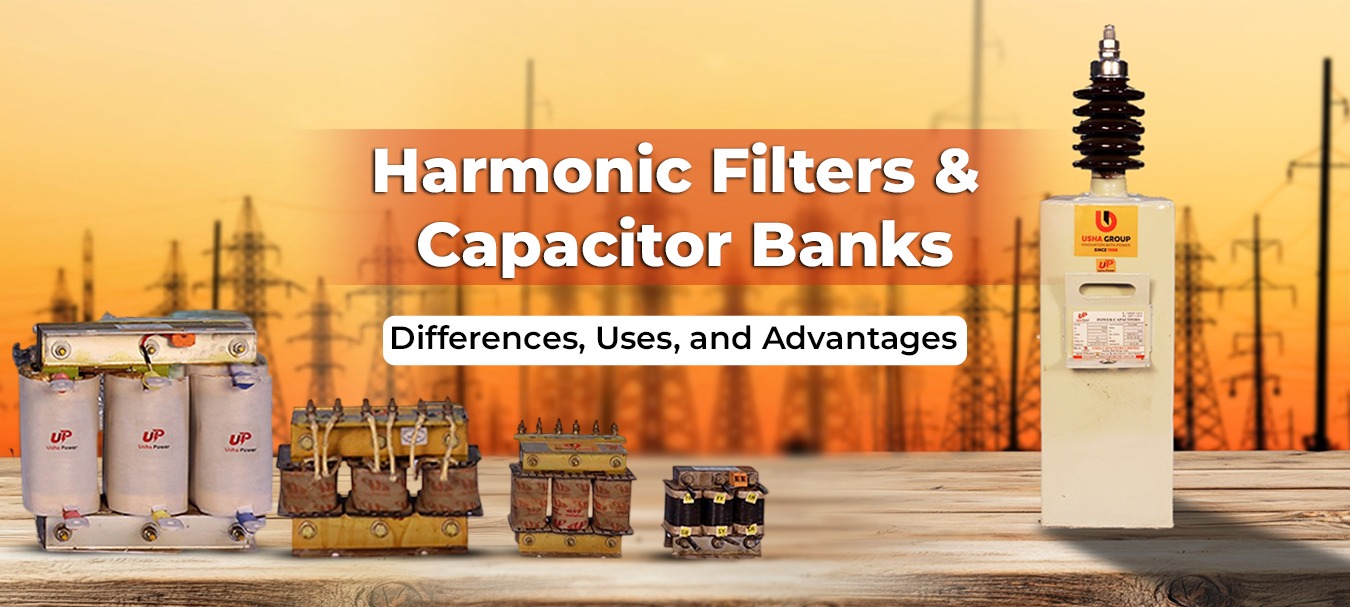
At this stage, it becomes easier to see the difference between harmonic filter and capacitor bank, but it is important to understand the contrast in deeper detail. A harmonic filter targets waveform distortions caused by nonlinear loads, whereas a capacitor bank focuses solely on reactive power support. Another difference between harmonic filter and capacitor bank lies in their mode of operation: filters manage unwanted frequencies, while capacitor banks supply a type of energy the system lacks. Many plants require both devices because controlling harmonics does not automatically improve power factor, and improving power factor does not address waveform distortion. For engineers, the real difference between harmonic filter and capacitor bank becomes clear when evaluating system performance issues. If the problem is overheating, tripping, or distorted voltage, a harmonic filter is needed. If the issue revolves around low power factor or poor voltage stability, a capacitor bank becomes the right solution. Understanding the difference between harmonic filter and capacitor bank also helps avoid incorrect installations, especially because capacitor banks themselves can worsen harmonics if not paired with proper filtering. This connection highlights how essential it is to evaluate the load profile before choosing either device. In summary, the practical difference between harmonic filter and capacitor bank can be traced to their unique roles within the broader power quality landscape.
Where Harmonic Filters Are Commonly Used
Industries with heavy nonlinear loads find harmonic filters indispensable. Manufacturing plants with large automation setups, steel industries using arc furnace systems, textile factories running variable speed drives, and data centres operating multiple UPS systems are some of the most common users. In such environments, harmonics are not just a small inconvenience; they can cause severe losses and equipment downtime. Harmonic filters are also deployed in renewable energy systems, where inverter-based equipment can generate high harmonic levels if not properly managed. Transport systems, airports, and large HVAC networks also rely on filters to maintain stable power quality.
Where Capacitor Banks Are Typically Used
Capacitor banks have a much broader application range because almost every industry works with inductive loads. Manufacturing plants, commercial buildings, hospitals, malls, food processing units, cold storage facilities, and even small workshops install capacitor banks to maintain a stable power factor. Utility companies also deploy massive capacitor banks at substations to maintain voltage levels across long-distance transmission lines. Capacitor banks are common wherever efficiency improvement, cost control, and voltage support are needed. Their role becomes more important in facilities where motors start frequently or where load profiles fluctuate throughout the day.
Advantages of Harmonic Filters
Harmonic filters offer multiple benefits beyond harmonic reduction. By stabilizing waveform quality, they help extend the lifespan of transformers, switchgear, and sensitive electronic equipment. They reduce overheating, minimize nuisance tripping, and lower the risk of insulation failure. A cleaner waveform also improves metering accuracy and reduces energy losses that often go unnoticed. When harmonics are brought under control, the entire electrical network operates smoothly, which directly contributes to better productivity and fewer unplanned shutdowns.
Advantages of Capacitor Banks
Capacitor banks deliver a different set of advantages rooted in reactive power management. Improving power factor reduces the load on transformers, decreases current flow in cables, and enhances overall system efficiency. Industries save on electricity bills by avoiding power factor penalties. Capacitor banks also help maintain voltage stability, which ensures motors run cooler and more efficiently. They are simple in construction, easy to maintain, and extremely reliable when regularly inspected. In many industries, they play the silent role of maintaining system health without drawing much attention.
Why Many Systems Need Both
Although harmonic filters and capacitor banks serve different purposes, many industries end up installing both because they complement each other. A capacitor bank alone can sometimes amplify harmonic problems, especially when installed in a network with heavy nonlinear loads. Similarly, a harmonic filter alone cannot supply reactive energy during high inductive loads. When used together, the electrical system becomes more stable, efficient, and predictable. Engineers often evaluate load behaviour, harmonic levels, and power factor trends before deciding the right combination for any setup.
If you are the owner of an industrial or commercial unit and are searching for harmonic filters and capacitor banks that genuinely support long-term electrical stability, Usha Power provides high-quality solutions designed to handle demanding loads, maintain voltage stability, and ensure reliable performance. Our products help manage reactive power effectively, reduce energy losses, and protect equipment from stress caused by nonlinear loads. We focus on solutions that withstand continuous use in challenging environments and deliver dependable performance over time. With the right selection and installation of harmonic filters and capacitor banks, you can achieve safer, more stable, and efficient energy management, ensuring smooth operations and consistent performance across your entire facility.