

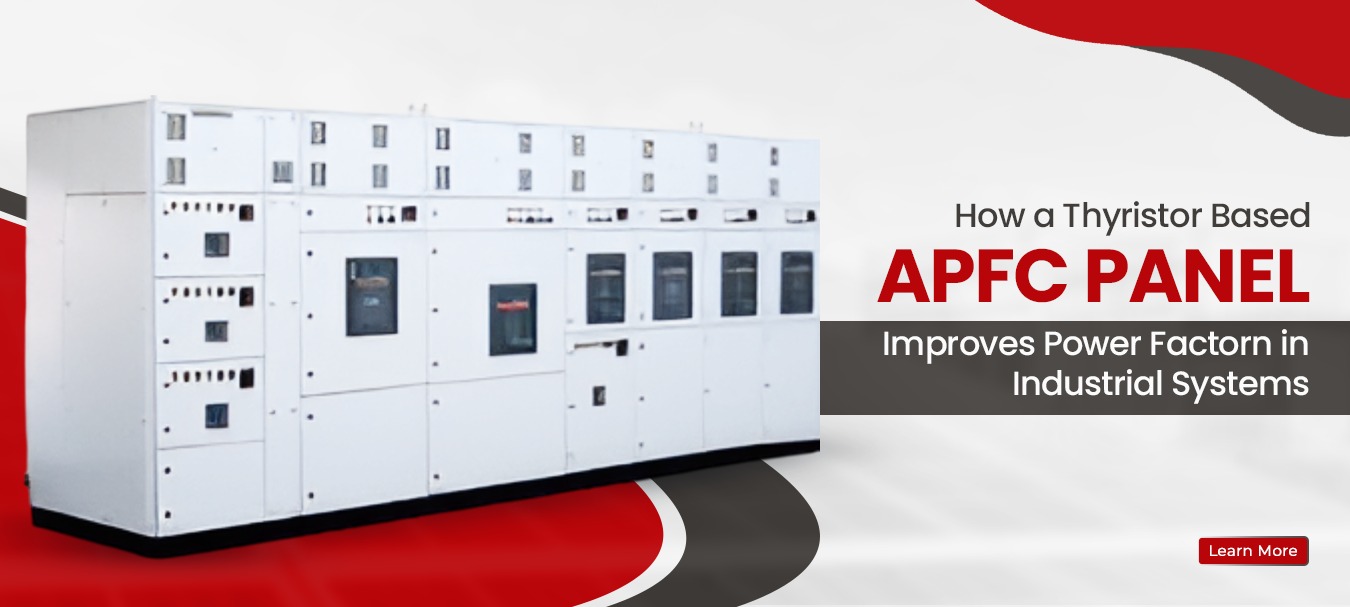
In modern industrial environments, electrical efficiency plays a critical role in keeping operations stable and cost-effective. One of the most common challenges faced by factories and processing units is low power factor, mainly caused by inductive loads such as motors, transformers, and heavy machinery. Poor power factor leads to higher electricity bills, increased system losses, and stress on electrical equipment. To address this issue, engineers rely on automatic power factor correction systems that react quickly to load changes. A thyristor based apfc panel is designed to manage reactive power dynamically, helping industries maintain electrical balance and improve overall system performance.
Understanding Power Factor in Industrial Electrical Systems
Power factor is the ratio between active power, which performs useful work, and apparent power, which is drawn from the electrical supply. In industrial setups, most equipment operates on induction principles, creating a lagging power factor. When the power factor drops, utilities need to supply more current to deliver the same amount of usable power. This increased current results in higher line losses, voltage drops, and reduced efficiency of cables and switchgear. Maintaining an optimal power factor is not just about reducing penalties from utility providers but also about ensuring the long-term reliability of electrical infrastructure within the plant.
Limitations of Conventional Power Factor Correction Methods
Traditional power factor correction systems often use contactor-switched capacitor banks. While these systems are effective for steady loads, they struggle in environments where load conditions change rapidly. Mechanical contactors have switching delays and limited operational life due to frequent on-off cycles. They can also generate transients during switching, which may disturb sensitive equipment. In industries with fluctuating demand, such as rolling mills, packaging units, or injection molding plants, slow response times can result in under-correction or over-correction, both of which negatively impact system stability.
Working Principle of a Thyristor-Based Switching System
A thyristor based apfc panel replaces mechanical switching with solid-state devices known as thyristors. These semiconductor components allow capacitors to be connected and disconnected almost instantaneously, typically within milliseconds. The control unit continuously monitors the power factor and calculates the required reactive power compensation. Based on this calculation, the thyristors trigger the appropriate capacitor steps at the precise zero-crossing point of the voltage waveform. This method eliminates inrush currents and switching transients, ensuring smooth and reliable correction even under rapidly changing load conditions.
Impact on Voltage Stability and System Losses
One of the major advantages of fast-acting power factor correction is improved voltage regulation. When reactive power demand is managed efficiently, voltage levels across the system remain more stable. This stability reduces overheating in motors and transformers and minimizes energy losses in distribution lines. By using a thyristor based apfc panel, industries can maintain consistent voltage profiles, which directly contributes to better machine performance, fewer breakdowns, and extended equipment life. Reduced losses also translate into lower operational costs over time.
Suitability for Dynamic and Non-Linear Loads
Industrial processes today often involve automation, variable frequency drives, welding machines, and other non-linear loads. These loads change rapidly and draw reactive power inconsistently. Conventional capacitor banks cannot respond fast enough to these variations. A thyristor based apfc panel is particularly suitable for such environments because it adjusts compensation levels in real time. This capability helps prevent power factor oscillations and avoids unnecessary stress on capacitors, making the system more reliable in demanding industrial applications.
Comparison with Mechanically Switched APFC Panels
From an operational perspective, the key difference lies in speed and durability. Mechanically switched systems depend on physical movement, which naturally limits response time and increases wear. Solid-state switching, on the other hand, has no moving parts. A thyristor based apfc panel offers silent operation, minimal maintenance, and consistent performance over long periods. While the initial investment may be higher, the reduction in downtime, maintenance effort, and energy losses often justifies the choice in medium to large industrial facilities.
Role in Meeting Utility and Compliance Requirements
Many electricity providers impose penalties when industrial consumers operate at a low power factor. Continuous monitoring and fast correction help industries stay within acceptable limits set by utilities. Reliable power factor management also supports compliance with internal energy efficiency goals and electrical standards. By ensuring accurate and timely reactive power compensation, a thyristor based apfc panel becomes an important part of an industry’s overall energy management strategy rather than just a corrective add-on.
Final Thoughts
Effective power factor correction is essential for modern industrial systems that demand efficiency, reliability, and adaptability. As electrical loads become more dynamic, the need for fast and precise compensation grows. A thyristor based apfc panel addresses these challenges by offering rapid response, improved voltage stability, and reduced system losses. Its ability to handle frequent load variations makes it a practical solution for industries aiming to optimize electrical performance while protecting equipment and controlling energy costs over the long term.
If you are an owner of industrial or commercial electrical infrastructure where motors, drives, transformers, and non-linear loads operate continuously and are searching for thyristor based APFC panel solutions that deliver robust, real-time power factor correction and effective harmonics management, Usha Power is a trusted solution partner with proven expertise in power quality engineering. We design, engineer, and deliver advanced APFC panels, harmonic filters, control panels, and capacitor banks that enhance power quality and boost energy efficiency, backed by decades of experience in power systems and customized support tailored to your operations.
