
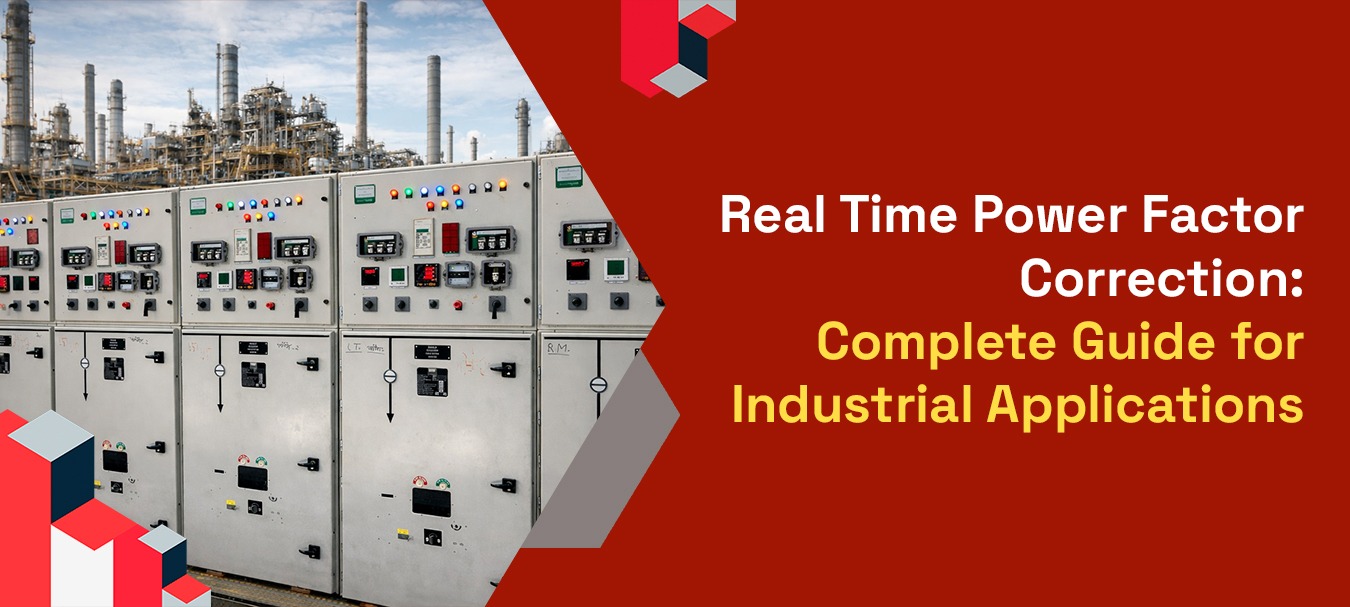
Industrial plants rely on equipment that draws power in quick, unpredictable bursts. When heavy machinery like automated welding stations or rolling mills run, they draw extra reactive energy to keep their magnetic fields going. Standard mechanical systems can take several seconds to respond to these sudden changes. This creates an operational delay that causes unnecessary energy loss and voltage drops across your network. Fixing this delay requires a more responsive approach. Implementing real time power factor correction helps facilities supply the exact reactive power needed in milliseconds, which stabilizes the grid and prevents unexpected utility charges.
The Challenge of Quick Loads
Automated manufacturing creates a constantly changing environment for plant electrical networks. Equipment cycles on and off throughout the day, causing rapid shifts in power demand. Traditional panels use physical switches called contactors to turn capacitors on. These contactors take time to move. While they delay, your machinery is forced to pull that reactive current straight from the main utility grid, lowering your plant efficiency.
Financial Impact of Delays
Utility providers closely monitor how efficiently your facility uses electricity. If your plant regularly draws high reactive current due to slow compensation, your monthly bill will reflect it. Providers add extra fees to penalise this inefficiency, which increases operational expenses. Fast machinery needs a modern solution. Using real time power factor correction cuts down these extra utility costs by matching your equipment speed.
How Solid-State Technology Works
The main difference between standard systems and rapid systems comes down to the switching mechanism. Advanced setups use solid-state thyristor switches instead of mechanical parts. These semiconductor devices do not have moving parts that break down over time. The thyristor monitors the grid constantly. When a machine cycles on, it switches in milliseconds to provide the right energy right away.
Handling Grid Disturbances
Mechanical switches create another issue called voltage transients. Every time a physical switch clangs shut, it causes brief electrical disturbances in your plant network. These regular spikes can affect cable insulation over time and damage sensitive circuit boards. Solid-state switches avoid this completely. The thyristor switches at the zero-voltage point, which helps reduce sudden electrical disturbances and protects your electronics.
Avoiding Over-Compensation
Slow systems also cause problems when machines stop suddenly. Imagine a heavy crane dropping a load. A mechanical switch might have turned on to support the lift, but it stays stuck on after the lift ends. This pushes excess reactive power back into your system, creating unwanted voltage variations. A fast electronic panel drops the connection the same millisecond the load drops.
Transformer Capacity Benefits
Adding new production lines often makes managers think they need a larger utility transformer. But if your current transformer is loaded down with uncompensated reactive power, it runs hot and lacks space for new gear. Handling reactive current instantly takes the burden off your main cables. They run cooler, freeing up capacity so you can expand without expensive transformer modifications.
Component Reliability in Heavy Industry
You cannot pair high-speed semiconductor switches with basic commercial capacitors. The rapid cycling involved in real time power factor correction creates significant internal heat. Standard dry capacitors often fail under high temperatures or harmonic stress. Heavy industrial settings require rugged, oil-filled capacitors. The oil cools the components effectively, helping the panel survive the demanding conditions of a hot factory floor.
Meeting Grid Compliance Rules
Electricity providers are tightening rules regarding power quality. Industrial operations must keep their power factor stable to avoid compliance-related operational issues. Standard panels struggle when multiple machines turn on randomly. A fast thyristor panel tracks these unpredictable shifts perfectly. It keeps your facility aligned with grid regulations, no matter how chaotic your daily production schedule looks.
Less Maintenance and Downtime
Maintenance teams spend significant time changing worn contactors in old panels. Physical components degrade quickly when switching high currents thousands of times a week, causing unexpected downtime. Solid-state switches do not have this problem. Because there are no moving parts, the system handles millions of cycles without wearing out. Your team can focus on actual production machinery instead.
Better Practical Plant Monitoring
Modern high-speed systems also work as diagnostic tools. The internal controllers gather data on your energy use. Operators can check the screen to see how power shifts during real time power factor correction. This data helps with predictive maintenance. If a machine draws more current than usual, its bearings might be wearing out, letting you fix it early.
System Integration Made Simple
Upgrading your factory’s power quality does not mean you have to remodel your entire electrical room. Modern electronic panels are built to work with your current distribution boards and switchgear. An electrician can install the new panel alongside your existing setup. Once wired in, the system handles the workload automatically without causing any major electrical modifications or plant downtime.
Final Thoughts
Keeping a manufacturing plant competitive requires infrastructure that matches your operational speed. Slow mechanical systems can cause unnecessary energy loss, damage sensitive electronics, and lead to high utility bills. Moving to real time power factor correction keeps your grid steady and efficient. Your equipment runs smoothly, your operating costs go down, and your entire electrical system becomes much more reliable.
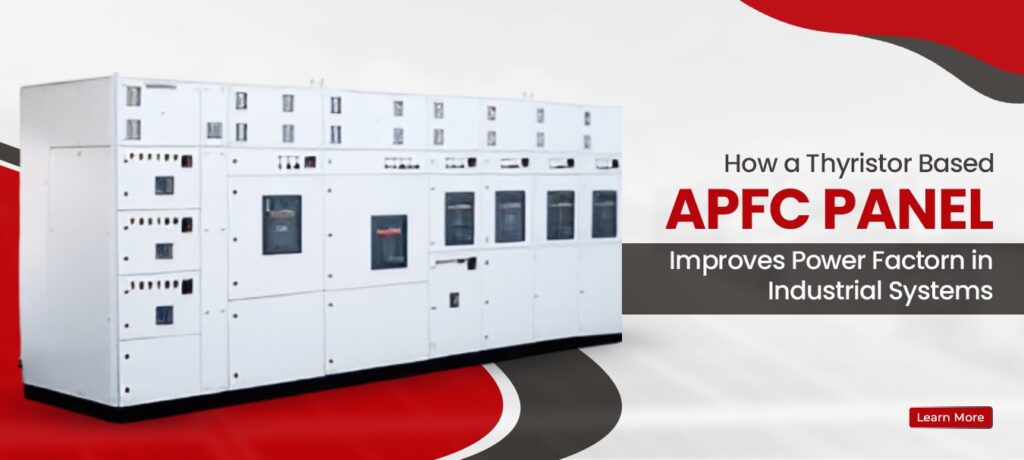
At Usha Power, we know how much heavy electrical demands can affect your facility’s daily operations. When your plant relies on quick-cycle machinery like welders or rolling mills, standard panels often struggle under demanding conditions. That is why we engineer thyristor-switched APFC systems designed for active industrial environments. We combine responsive electronic controllers with our own heavy-duty MKP oil-filled capacitors. This setup ensures stable switching in milliseconds while managing high thermal and harmonic conditions safely. We focus on providing practical power quality solutions that protect your machinery and help reduce utility penalties. If your plant deals with rapidly changing electrical loads, we can help you build a more stable network. Trust Usha Power to keep your operations efficient and running smoothly.